NKC-12: India's National Knowledge Commission – 12: Create a Department of Knowledge at the Centre and place it under the Prime Minister
Should there be a Ministry of Knowledge (MOK) or Department of Knowledge (DOK) or Department of Knowledge Management (DKM) at the Centre? The question assumes importance in the wake of Indian Prime Minister launching the time-bound national knowledge commission (NKC) on August 2, 2005 in New Delhi. It is a common practice in government to create a ministry or department acknowledging the importance of a subject or when the government wishes to take a major initiative.
The business of government in India is conducted through its ministries/departments. Currently the Indian government conducts its business through some 50 ministries and/or departments (55 ministries/52 departments, to be precise). Note that there are many ministries, which do not have any departments. Similarly there are departments, which are not part of any ministry.
Recent years have seen creation of many new ministries in India like Ministry of Panchayati Raj, Ministry of Overseas Indian Affairs and Ministry of Development of North Eastern Region and departments like Department of Information Technology, Department of Bio-Technology and Department of Scientific and Industrial Research. To add yet another ministry or department to the business of government, therefore, requires careful consideration.
Knowledge is widely recognized today as the prime mover of accelerated socio-economic development worldwide. It is the only way in which a developing country like India can competently face challenges on the path of its accelerated development. Also, states in India look toward the centre for leadership and guidance in new and emerging areas, in this case knowledge.
Time is, therefore, ripe for creating an appropriate mechanism at the centre for promoting and making best use of knowledge. Such a mechanism has become all the more necessary for providing ministerial oversight over the national knowledge commission (NKC) on day-to-day basis, more so as the national knowledge commission (NKC) has been given a long tenure of three years.
Creating a full-fledged ministry of knowledge may, however, be a costly proposition. On the other hand, creating an office for knowledge or creating knowledge as an item of government business and then assigning it to a ministry or department may also diminish the importance of knowledge. The solution, therefore, lies in between. Create a department of knowledge and place it under the prime minister. A minister of state can no doubt assist the prime minister as, for example, is currently the case with the Department of Personnel and Training.
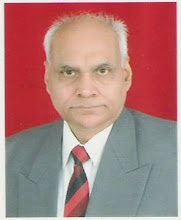
Dr D.C.Misra
August 4, 2005

Subscribe to:
Post Comments (Atom)
No comments:
Post a Comment