NKC-4: India's National Knowledge Commission-4: Commission looks forward to co-operating with multilateral agencies, think tanks and universities
India’s National Knowledge Commission looks forward to co-operating with multilateral agencies, think tanks and universities in India and abroad, according to its chairman Sam Pitroda. Says Pitroda: “We look forward to cooperating with the World Bank and other multilateral agencies as well as with think tanks and universities in India and abroad as the Commission works to harness knowledge for India’s development and realize its potential to become a major knowledge power." Check the statement at
http://web.worldbank.org/WBSITE/EXTERNAL/NEWS/0,,contentMDK:20560802~menuPK:51062075~pagePK:34370~piPK:34424~theSitePK:4607,00.html
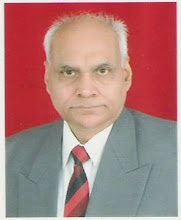
Dr D.C.Misra
June 30, 2005
Thursday, June 30, 2005

Wednesday, June 22, 2005
India's National Knowledge Commission-3: Good that the commission means business
India's National Knowledge Commission-3:Good that the knowledge commission means business but the commission must avoid to become a super-ministry.
It is good that India’s newly appointed national knowledge commission means business. This is reflected in commission’s innovative business procedure. The government appears to have prescribed an innovative two-tiered approach for the conduct of commission’s business.
At the top-level commission’s work will be guided by a national steering group (NSG) under the chairmanship of the Prime Minister with 1. Minister of Human Resource Development, 2. Minister of Agriculture, 3. Minister of Commerce and Industry, 4. Minister of Communication and Information Technology, 5. Deputy Chairman, Planning Commission, and Minister of State, Science and Technology, as its members. The ministers associated with the national steering group are those whose ministries are concerned with the terms of reference of the commission.
At the second tier, the 8-member commission, which has multi-disciplinary expertise, will deliberate on its terms of reference and seek guidance from the national steering group (STG). At this tier laterally, there will also be working groups (WGs) in the concerned departments / ministries which will hopefully provide necessary inputs to the commission to enable it to deliberate on its terms of reference and make appropriate recommendations to the national steering group (NSG). Much will depend upon how these working groups (WGs) are constituted and what mandate is given to them. Also, and lastly, at the this tier itself laterally, there will be a technical support group (TSG) “to be staffed by young recruits, hired on contract from premier educational institutions in the country.” What support will this group provide to the commission, however, is unclear.
Government has prescribed a unique procedure for the knowledge commission. Typically, such commissions in government are one-shot affair. The commissions collect necessary facts and figures, deliberate on its terms of reference, make recommendations to the government within a specified time period and then become functus officio. On the acceptance of their recommendations by the concerned department / ministry, the concerned department / ministry implements the accepted recommendations. It appears that in the case of the knowledge commission, the commission will make its recommendations to the government piecemeal, obtain government’s orders on them from time to time and then oversee their implementation. If this be the case then the knowledge commission must tread this path very carefully lest it treads on the toes of the departments / ministries which will surely, and understandably, defend their well-guarded turfs.
This is a genuine danger and the knowledge commission must resist the temptation to yield to it. Let the concerned departments / ministries be the implementing agencies, which they are. The knowledge commission must only be a recommendatory or advisory body and should in no case assume any implementing responsibility. If it does so, it will be perceived as a super-department or super-ministry, which can only have unproductive results as the commission will not be able to secure the loyalty of public personnel working under the administrative control of other departments / ministries.
Dr D.C. Misra
June 22, 2005
A Reader writes: 6/12/2005 2-11 p.m.
Subject: India’s National Knowledge Commission: Oh! billion Gods! Save this Country from inactive commissions!
Dear Dr. D.C. Misra,
I never knew there was such as - National Knowledge Commission - existing in India!. Wow ! We have so many commissions the act of which never reach the grass roots.
I worked in the Information and Communication Technology Sector since 1988 to date But not a single soul from either Government and nor Non Government ever contacted me to ask what is your dream? what you want to do for the nation? how much did you suffer by putting yourself at work in grassroot level?
ICT in India ? Can it really penetrate at Grass Root Level and Empower the Common Man?
What is the use of such commissions which do not have any meaning for its existence nor its actions?
Oh! billion Gods ! Save this Country from inactive commissions!
Er. Hemanta
--- "Dr D.C.Misra" wrote:
> Cyber Quiz: NKC-1:India's National Knowledge
> Commission-1: Its Composition: High time it launches its website
>
>
My Comments:
My dear Er Hemanta,
I appreciate your good work and share your concerns. However, there is no need to be cynical about it. We have high expectations from the knowledge commission. Let us help it in its deliberations and all of us can contribute to its success. Hopefully it will meet our expectations.
Dr D.C. Misra
June 22, 2005
It is good that India’s newly appointed national knowledge commission means business. This is reflected in commission’s innovative business procedure. The government appears to have prescribed an innovative two-tiered approach for the conduct of commission’s business.
At the top-level commission’s work will be guided by a national steering group (NSG) under the chairmanship of the Prime Minister with 1. Minister of Human Resource Development, 2. Minister of Agriculture, 3. Minister of Commerce and Industry, 4. Minister of Communication and Information Technology, 5. Deputy Chairman, Planning Commission, and Minister of State, Science and Technology, as its members. The ministers associated with the national steering group are those whose ministries are concerned with the terms of reference of the commission.
At the second tier, the 8-member commission, which has multi-disciplinary expertise, will deliberate on its terms of reference and seek guidance from the national steering group (STG). At this tier laterally, there will also be working groups (WGs) in the concerned departments / ministries which will hopefully provide necessary inputs to the commission to enable it to deliberate on its terms of reference and make appropriate recommendations to the national steering group (NSG). Much will depend upon how these working groups (WGs) are constituted and what mandate is given to them. Also, and lastly, at the this tier itself laterally, there will be a technical support group (TSG) “to be staffed by young recruits, hired on contract from premier educational institutions in the country.” What support will this group provide to the commission, however, is unclear.
Government has prescribed a unique procedure for the knowledge commission. Typically, such commissions in government are one-shot affair. The commissions collect necessary facts and figures, deliberate on its terms of reference, make recommendations to the government within a specified time period and then become functus officio. On the acceptance of their recommendations by the concerned department / ministry, the concerned department / ministry implements the accepted recommendations. It appears that in the case of the knowledge commission, the commission will make its recommendations to the government piecemeal, obtain government’s orders on them from time to time and then oversee their implementation. If this be the case then the knowledge commission must tread this path very carefully lest it treads on the toes of the departments / ministries which will surely, and understandably, defend their well-guarded turfs.
This is a genuine danger and the knowledge commission must resist the temptation to yield to it. Let the concerned departments / ministries be the implementing agencies, which they are. The knowledge commission must only be a recommendatory or advisory body and should in no case assume any implementing responsibility. If it does so, it will be perceived as a super-department or super-ministry, which can only have unproductive results as the commission will not be able to secure the loyalty of public personnel working under the administrative control of other departments / ministries.
Dr D.C. Misra
June 22, 2005
A Reader writes: 6/12/2005 2-11 p.m.
Subject: India’s National Knowledge Commission: Oh! billion Gods! Save this Country from inactive commissions!
Dear Dr. D.C. Misra,
I never knew there was such as - National Knowledge Commission - existing in India!. Wow ! We have so many commissions the act of which never reach the grass roots.
I worked in the Information and Communication Technology Sector since 1988 to date But not a single soul from either Government and nor Non Government ever contacted me to ask what is your dream? what you want to do for the nation? how much did you suffer by putting yourself at work in grassroot level?
ICT in India ? Can it really penetrate at Grass Root Level and Empower the Common Man?
What is the use of such commissions which do not have any meaning for its existence nor its actions?
Oh! billion Gods ! Save this Country from inactive commissions!
Er. Hemanta
--- "Dr D.C.Misra"
> Cyber Quiz: NKC-1:India's National Knowledge
> Commission-1: Its Composition: High time it launches its website
>
>
My Comments:
My dear Er Hemanta,
I appreciate your good work and share your concerns. However, there is no need to be cynical about it. We have high expectations from the knowledge commission. Let us help it in its deliberations and all of us can contribute to its success. Hopefully it will meet our expectations.
Dr D.C. Misra
June 22, 2005
Wednesday, June 15, 2005
India's Knowledge Commission sans `knowledge worker' or `knowledge economy.'
India's National Knowledge Commission-2:Its Terms of Reference:
Knowledge Commission sans `knowledge worker' or `knowledge economy.'
India's National Knowledge Commission has the following terms of reference: The Commission will advise the Prime Minister on matters relating to institutions of knowledge production, knowledge use and knowledge dissemination.
The main terms of reference of the Commission, referred to as the "knowledge pentagon, include: (i) Building excellence in the educational system to meet the knowledge challenges of the 21st Century, (ii) Promote research in Science and Technology, (iii) Improve the management of institutions engaged in Intellectual
Property Rights, (iv) Promote knowledge applications in agriculture and industry, and (v) Promote the use of knowledge capabilities to make the government effective, transparent, accountable and public-oriented.
It will also explore ways in which knowledge can be made more widely accessible in India for maximum public benefit.
The danger to treat `knowledge' as a `commodity'(which it is not) to be produced (knowledge is created, not produced), used and disseminated (the natural order here is `dissemination' followed by `use' and not the other way) should be avoided by the knowledge commission. Moreover, in social and development context it is the `usable knowledge' (practical utility), which matters to the people and not the `knowledge for its own sake' (intellectual pursuit). When it has been proposed that the knowledge commission `will also explore ways in which knowledge can be made more widely accessible in India for maximum public benefit,' this term of reference presuppose existence of (usable) knowledge, which need not always be the case. The general perception is that not many 'knowledge institutions' (universities, research institutes / laboratories) have a ready storehouse of (usable) knowledge for dissemination among the people.
The main terms of reference of the knowledge commission can be grouped into five categories in brief: (i) excellence in educational system, (ii) research in science and technology, (iii) management of intellectual property rights (IPRs) institutions, (iv) knowledge applications in agriculture and industry, and (v) good governance.
These main terms of reference of the knowledge commission have two striking features. First, their inter-sectoral nature. Usually in government, such commissions or their lesser entities, (high powered) committees, are sectoral in nature, say, confined to a sector like education, agriculture, industry, etc. The multi-sectoral terms of reference of knowledge commission will require an expertise of a very high order for inter-sectoral co-ordination. The knowledge commission
as constituted at present does not have such an expertise though it does have a former member of the Indian administrative service who resigned from the service to pursue academic interests and till recently was vice chancellor, Delhi university and as such has to be treated more of a specialist rather than a generalist.
Secondly, and more importantly, India is perhaps the first and so far the only country in the world which has set up a (national) knowledge commission. This is a laudable step. The terms of reference of the knowledge commission, however, do not explicitly recognize the `knowledge worker' or `knowledge economy' or `knowledge society.' This is worrisome not only because many Indians are spearheading the
ongoing information revolution and India itself is a notable contributor to and beneficiary of the (new) `knowledge economy' but because creation of the national knowledge commission is a unique opportunity in which the knowledge commission can have a vision of Indian `knowledge society' based on `knowledge economy' and driven
by `knowledge workers' and prepare a plan of action to realize the vision in a definite time-frame. No commission, which calls itself, `knowledge' commission can afford to ignore these basic concepts, which are driving the ongoing information revolution worldwide.
Dr D.C.Misra
June 15, 2005
Knowledge Commission sans `knowledge worker' or `knowledge economy.'
India's National Knowledge Commission has the following terms of reference: The Commission will advise the Prime Minister on matters relating to institutions of knowledge production, knowledge use and knowledge dissemination.
The main terms of reference of the Commission, referred to as the "knowledge pentagon, include: (i) Building excellence in the educational system to meet the knowledge challenges of the 21st Century, (ii) Promote research in Science and Technology, (iii) Improve the management of institutions engaged in Intellectual
Property Rights, (iv) Promote knowledge applications in agriculture and industry, and (v) Promote the use of knowledge capabilities to make the government effective, transparent, accountable and public-oriented.
It will also explore ways in which knowledge can be made more widely accessible in India for maximum public benefit.
The danger to treat `knowledge' as a `commodity'(which it is not) to be produced (knowledge is created, not produced), used and disseminated (the natural order here is `dissemination' followed by `use' and not the other way) should be avoided by the knowledge commission. Moreover, in social and development context it is the `usable knowledge' (practical utility), which matters to the people and not the `knowledge for its own sake' (intellectual pursuit). When it has been proposed that the knowledge commission `will also explore ways in which knowledge can be made more widely accessible in India for maximum public benefit,' this term of reference presuppose existence of (usable) knowledge, which need not always be the case. The general perception is that not many 'knowledge institutions' (universities, research institutes / laboratories) have a ready storehouse of (usable) knowledge for dissemination among the people.
The main terms of reference of the knowledge commission can be grouped into five categories in brief: (i) excellence in educational system, (ii) research in science and technology, (iii) management of intellectual property rights (IPRs) institutions, (iv) knowledge applications in agriculture and industry, and (v) good governance.
These main terms of reference of the knowledge commission have two striking features. First, their inter-sectoral nature. Usually in government, such commissions or their lesser entities, (high powered) committees, are sectoral in nature, say, confined to a sector like education, agriculture, industry, etc. The multi-sectoral terms of reference of knowledge commission will require an expertise of a very high order for inter-sectoral co-ordination. The knowledge commission
as constituted at present does not have such an expertise though it does have a former member of the Indian administrative service who resigned from the service to pursue academic interests and till recently was vice chancellor, Delhi university and as such has to be treated more of a specialist rather than a generalist.
Secondly, and more importantly, India is perhaps the first and so far the only country in the world which has set up a (national) knowledge commission. This is a laudable step. The terms of reference of the knowledge commission, however, do not explicitly recognize the `knowledge worker' or `knowledge economy' or `knowledge society.' This is worrisome not only because many Indians are spearheading the
ongoing information revolution and India itself is a notable contributor to and beneficiary of the (new) `knowledge economy' but because creation of the national knowledge commission is a unique opportunity in which the knowledge commission can have a vision of Indian `knowledge society' based on `knowledge economy' and driven
by `knowledge workers' and prepare a plan of action to realize the vision in a definite time-frame. No commission, which calls itself, `knowledge' commission can afford to ignore these basic concepts, which are driving the ongoing information revolution worldwide.
Dr D.C.Misra
June 15, 2005
Saturday, June 11, 2005
India's National Knowledge Commission-1: Its Composition: It is a well-balanced, coherent team reflecting diversity of expertise
India's 8-member National Knowledge Commission has the following composition: 1. Mr Sam Pitroda (Chairperson), 2. Dr P.M. Bhargava (Vice-Chairperson), 3. Mr Nandan Nilekani, Member, 4. Dr. Deepak Nayyar, Member, 5. Mr Ashok Ganguly, Member, 6. Dr. Andre Beteille, Member, 7. Dr. Jayati Ghosh, Member, and 8. Dr. Pratap Bhanu Mehta, Member.
It is a reasonably sized commission, neither very small nor unwieldy, thus capable of carrying out its deliberations as a coherent team in time-bound professional manner. It is also well balanced in its composition reflecting a diversity of expertise and critical frontiers of knowledge. Hopefully, the deliberations of the commission will bear the expertise of Mr Sam Pitroda (telecom), Dr P.M. Bhargava (molecular biology), Mr Nandan Nilekani (information technology), Dr. Deepak Nayyar (higher education), Mr Ashok Ganguly secondary education), Dr. Andre Beteille (sociology), Dr. Jayati Ghosh (economics) and Dr. Pratap Bhanu Mehta (political science).
A notable omission is that of Secretary or Member-Secretary of the commission. It is not known as to how the commission proposes to conduct its business in his absence or without a secretariat or office. So far no public announcement has been made about the location of commission's office or its contact person. As a result those desirous of making contributions to the deliberations of the commission are disappointed. Notable official websites like India Image or that of Planning Commission are also silent about it. It is high time the commission launches its website which should also have an open discussion forum as the commission, among other things, proposes to build a more open society and more open economy.
Dr D.C.Misra
June 11, 2005
It is a reasonably sized commission, neither very small nor unwieldy, thus capable of carrying out its deliberations as a coherent team in time-bound professional manner. It is also well balanced in its composition reflecting a diversity of expertise and critical frontiers of knowledge. Hopefully, the deliberations of the commission will bear the expertise of Mr Sam Pitroda (telecom), Dr P.M. Bhargava (molecular biology), Mr Nandan Nilekani (information technology), Dr. Deepak Nayyar (higher education), Mr Ashok Ganguly secondary education), Dr. Andre Beteille (sociology), Dr. Jayati Ghosh (economics) and Dr. Pratap Bhanu Mehta (political science).
A notable omission is that of Secretary or Member-Secretary of the commission. It is not known as to how the commission proposes to conduct its business in his absence or without a secretariat or office. So far no public announcement has been made about the location of commission's office or its contact person. As a result those desirous of making contributions to the deliberations of the commission are disappointed. Notable official websites like India Image or that of Planning Commission are also silent about it. It is high time the commission launches its website which should also have an open discussion forum as the commission, among other things, proposes to build a more open society and more open economy.
Dr D.C.Misra
June 11, 2005
Subscribe to:
Posts (Atom)